

Summary
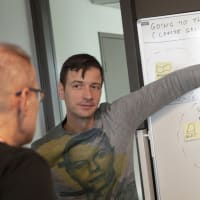
Domain Storytelling means that we let domain experts tell us stories about their tasks. While listening, we record the stories using a pictographic language. The domain experts can see immediately whether or not we understand their story. After very few stories, we are able to talk about the people, tasks, tools, work objects, and events in that domain.
For who?
Domain Storytelling is especially suited for:
- understanding a domain,
- establishing a shared language between domain experts and IT expert,
- talking about software requirements,
- and designing viable, software-supported business processes.
Domain Storytelling transports the knowledge from the domain experts' heads into the heads of developers, product owners, product managers and business analysts. Domain Storytelling brings these roles together in a workshop where your domain experts will learn from each other and coordinate tasks. Your common understanding of tasks and business processes will be documented as a picture with simple pictograms.
What you'll learn
Learning Outcomes
You will learn how to adapt the method to the various purposes and you will try out different tools. After the workshop, you will be able to apply Domain Storytelling on your own.
Topics covered
In this workshop, we will explore how Domain Storytelling can help you with different aspects of DDD:
- crunch domain knowledge
- constitute ubiquitous language
- segregate bounded contexts
- tactical modelling
Prerequisites
The workshop does not require programming skills. It is suited for people working as software developers, user experience designers, Scrum masters, product owners, product managers, project managers, and business analysts.
What participants say
The instructors proved us to know the topic very well and gave a clear explanation. The practical exercises provided real value and helped the learning process. This was a great opportunity to have previous doubts about this topic cleared. I feel more confident now to provide more value when facilitating my next domain story telling sessions.
I enjoyed trying out the visual method and understanding the caveats first hand to be aware when modelling real use cases. The lightweight atmosphere and clarity of Stefan and Henning when bringing their experience to the table makes this workshop a lot of fun. As it's a method easy to explain for non-initiated in DDD and non-developers, I think I can directly apply it with stakeholders when starting a deeper data modelling project within my data analytics responsibilities.
The workshop is very clear and simple to follow. I loved that we had a lot of excercises. I will use the techniques we have learned to document certain processes in my company and to identify the connections between our different apps.
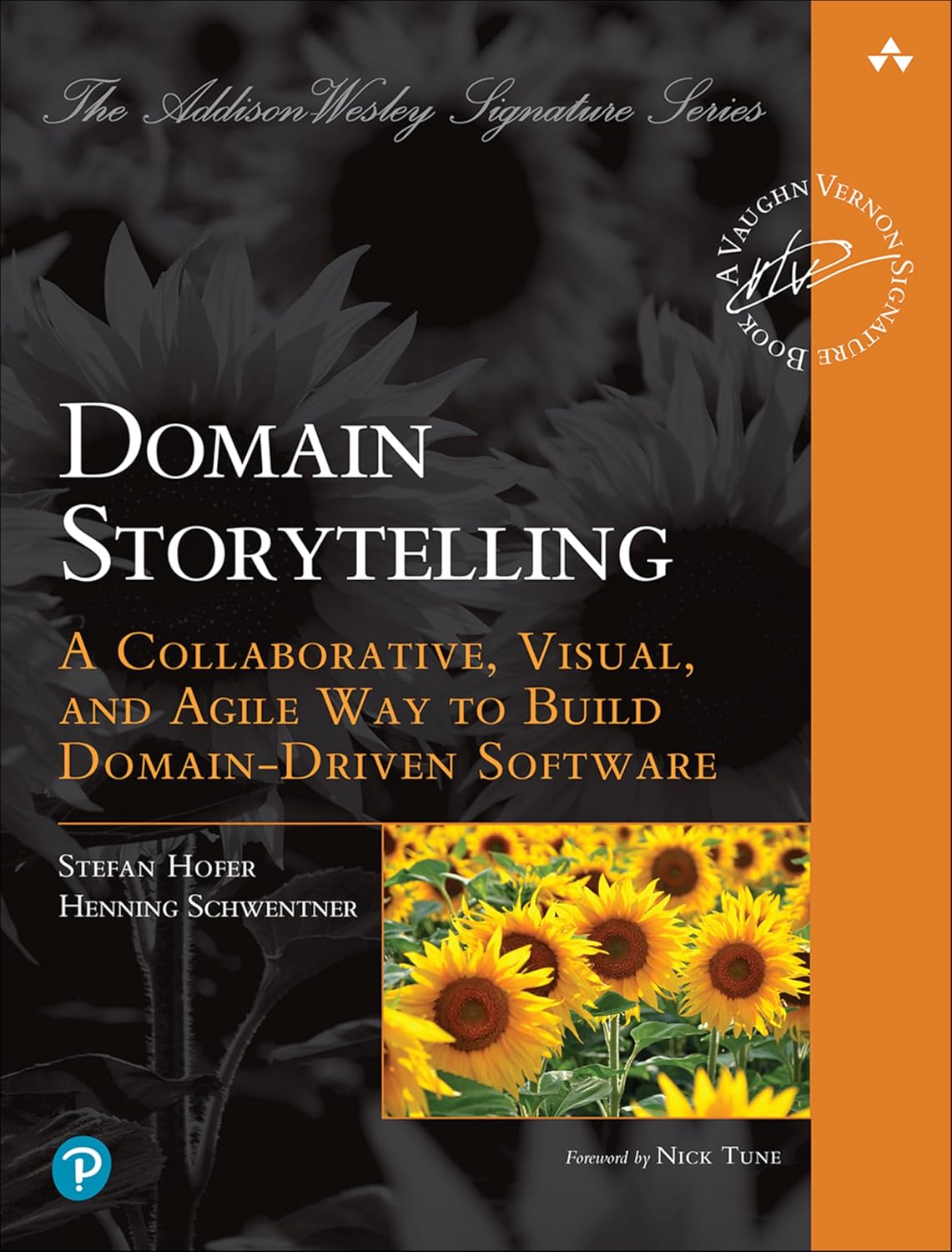
Domain Storytelling
Written by Stefan Hofer and Henning Schwentner - Published as part of Vaughn Vernon’s Signature Series at Addison-Wesley
Build Better Business Software by Telling and Visualizing Stories
Storytelling is at the heart of human communication: why not use it to overcome costly misunderstandings when designing software? By telling and visualizing stories, domain experts and team members make business processes and domain knowledge tangible. Domain Storytelling enables everyone to understand the relevant people, activities, and work items. With this guide, the method's inventors explain how domain experts and teams can work together to capture insights with simple pictographs, show their work, solicit feedback, and get everyone on the same page.
Stefan Hofer and Henning Schwentner introduce the method's easy pictographic language, scenario-based modelling techniques, workshop format, and relationship to other modelling methods. Using step-by-step case studies, they guide you through solving many common problems:
- Fully align all project participants and stakeholders, both technical and business-focused
- Master a simple set of symbols and rules for modelling any process or workflow
- Use workshop-based collaborative modelling to find better solutions faster
- Draw clear boundaries to organise your domain, software, and teams
- Transform domain knowledge into requirements, embedded naturally into an agile process
- Move your models from diagrams and sticky notes to code
- Gain better visibility into your IT landscape so you can consolidate or optimise it
This guide is for everyone who wants more effective software--from developers, architects, and team leads to the domain experts, product owners, and executives who rely on it every day.